

Dr. Stephen C. Schmid Performs Rare 3D-Printed Fibula Implant Procedure
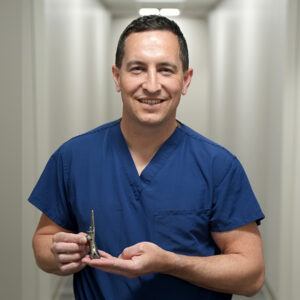
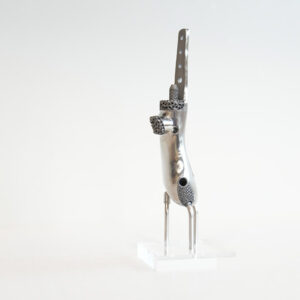
Dr. Stephen C. Schmid, a foot and ankle surgeon at CRMC, recently performed surgery using a custom 3D-printed titanium fibula implant. The fibula is the small bone on the outside of your lower leg that helps keep your ankle stable. Without it, ankle replacements can fail.
Why This Patient’s Ankle Reconstruction Had No Easy Answers
When this patient came to see Dr. Schmid, he had already been through years of ankle problems, multiple surgeries, and diminishing options. More than a decade ago, the patient underwent an ankle fusion procedure after ongoing ankle pain and instability.
Later, the fusion was converted into a total ankle replacement by another surgeon in the Twin Cities. But because the patient no longer had a functioning fibula, the smaller bone on the outside of the lower leg that helps provide ankle stability, the replacement eventually began to fail.
“He was experiencing pain, instability, and the ankle simply wasn’t functioning the way it should,” said Dr. Schmid. “In situations like this, the traditional options are often another difficult fusion procedure or, in severe cases, amputation.”
A Custom 3D-Printed Solution, Built from Scratch
Instead of accepting those limitations, Dr. Schmid envisioned another possibility.
“I came up with the idea in the office during his consultation,” he explained. “I designed what I wanted the fibula to look like and worked directly with the engineers to create it.”
Working alongside the medical technology company Restor3d, Dr. Schmid helped develop a custom 3D-printed titanium fibula implant designed specifically for the patient’s anatomy and surgical needs. The implant, measuring approximately five inches in length, was created through a series of collaborative design sessions using advanced imaging and CAD modeling technology.
How the Surgery Worked
The surgery itself was highly complex and was completed in phases. Dr. Schmid first removed the failing ankle replacement components and placed an antibiotic spacer before moving forward with the revision total ankle replacement and implantation of the custom fibula device.
According to Dr. Schmid, this may have been only the third procedure of its kind performed in the United States using a custom 3D-printed fibula implant as part of a revision total ankle reconstruction.
“This was truly cutting-edge surgery,” he said. “We are able to offer unique solutions for unique problems, and that means patients can receive advanced care close to home instead of feeling like they have to travel elsewhere for innovative treatment options.”
What Recovery Looks Like
Recovery from the procedure is significant but promising. Following surgery, the patient remained off the affected foot for approximately 4 to 6 weeks before beginning weight-bearing activity and aggressive physical therapy. Most patients undergoing this type of ankle replacement surgery participate in 10 to 12 weeks of rehabilitation, with many ready to transition out of a walking boot around that timeframe.
How 3D Printing Is Changing the Future
Dr. Schmid said the case highlights how rapidly technology is advancing within orthopaedic and reconstructive foot and ankle surgery.
“The ability to custom-design implants for individual patients changes what’s possible,” said Dr. Schmid. “Cases that once had very limited options may now have reconstructive solutions that simply didn’t exist even a few years ago.”
Because of the rarity and complexity of the case, Dr. Schmid is also exploring the possibility of publishing the procedure as a medical case study.
Get Advanced Ankle Reconstruction Care Close to Home
For patients in the region, the message is simple: advanced, innovative orthopaedic care is available close to home.
“We’re doing procedures here that go above and beyond what you might expect to find in a rural community,” said Dr. Schmid. “Our goal is always to find the best possible solution for each individual patient.”
If you’re dealing with a complex foot or ankle problems, schedule an appointment or learn more about foot and ankle care at CRMC.
You Might Also Like
- Keep Doing What You Love: Why Preventive Care Matters for Men
- CRMC Named as “100 Critical Access Hospitals to Know”
- CRMC Recognized Among Minnesota Hospitals that Patients Highly Recommend
- CRMC Earns 5-Star Rating for Nurse Communication
- CRMC Receives Four Statewide Awards for Innovation and Excellence