
SpaceOAR® Hydrogel for Prostate Cancer Radiation Therapy
SpaceOAR Hydrogel is is a temporary gel placed between the prostate and rectum to create space. This space helps protect the rectum from radiation exposure, which can reduce the risk of side effects during prostate cancer treatment.

Why Creating Space Matters
Radiation therapy is an effective treatment for prostate cancer, but it can also affect nearby organs. Because the prostate sits close to the rectum, radiation treatment may unintentionally expose the rectum to radiation, which can lead to bowel, urinary, or sexual side effects.

Without SpaceOAR Hydrogel
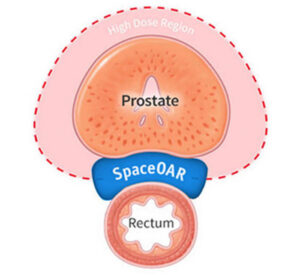
With SpaceOAR Hydrogel
Common Questions
What is it made of?
SpaceOAR Hydrogel is a soft gel material that is mostly made of water and polyethylene glycol (PEG), which is commonly used in other medical implants. The material is biodegradable and is designed to be absorbed and leave your body naturally after about 6 months.
Where is the procedure performed?
The procedure to implant SpaceOAR Hydrogel is generally a brief outpatient procedure, and can be done in a doctor’s office, hospital or clinic before starting radiation treatment.
Is SpaceOAR Hydrogel widely used?
SpaceOAR Hydrogel is now the option of choice for doctors and patients prior to radiation therapy. It is used in leading cancer centers, and with most types of radiation therapy. Many radiation oncologists, urologists and interventional radiologists recommend SpaceOAR Hydrogel for their prostate cancer patients.
What are the risks with SpaceOAR Hydrogel?
SpaceOAR Hydrogel contains Polyethylene Glycol (PEG). As with any medical treatment, there are some risks involved with the use of SpaceOAR Hydrogel. Potential complications associated with SpaceOAR Hydrogel include, but are not limited to:
- Pain associated with SpaceOAR Hydrogel injection
- Pain or discomfort associated with SpaceOAR Hydrogel
- Local inflammatory reactions
- Infection (including abscess)
- Urinary retention
- Urgency
- Constipation (acute, chronic, or secondary to outlet perforation)
- Rectal tenesmus/muscle spasm
- Mucosal damage
- Ulcers
- Fistula
- Perforation (including prostate, bladder, urethra, rectum)
- Necrosis
- Allergic reaction (localized or more severe reaction, such as anaphylaxis
- Embolism (venous or arterial embolism is possible and may present outside of the pelvis, potentially impacting vital organs or extremities)
- Syncope and bleeding.
The occurrence of one or more of these complications may require treatment or surgical intervention. Please talk to our Urology team about the risks and benefits associated with SpaceOAR Hydrogel
Request a Urology Appointment
To learn more about SpaceOAR Hydrogel or to explore additional resources request an appointment with our Urology team.