
Urology Cancer Diagnosis and Care
A cancer diagnosis can bring uncertainty and raise many questions. At CRMC, our urology team is here to help you understand what your diagnosis means and what to expect next, so you can move forward feeling informed and supported.
Request an Appointment
Cancers We Treat
Our urology team diagnoses and treats cancers of the urinary system and male reproductive organs. Care is based on the type of cancer, how advanced it is, and each patient’s individual needs.
- Prostate cancer
- Bladder cancer
- Kidney cancer
- Testicular cancer
- Other urologic cancers
Understanding Prostate Cancer
Understanding Your Cancer Diagnosis
When someone hears the word “cancer,” it can bring a rush of emotions, fear, and uncertainty. That reaction is completely normal. Our goal is to help patients slow things down, understand what the diagnosis really means, and feel supported as we talk through next steps together.
A cancer diagnosis does not mean the same thing for every person. Some cancers grow slowly and may not need immediate treatment, while others require closer attention. Understanding the type of cancer you have and how it behaves is an important part of deciding what care is right for you.
Taking Time to Review Results
One of the most important parts of cancer care is taking time to review test results together. During your visit, your provider will explain what the results show and what they mean for your health. This includes discussing:
- Whether cancer is present
- How aggressive it appears
- What options may be appropriate moving forward
Patients are encouraged to ask questions and share concerns. These conversations are not rushed, and decisions are not made all at once.
Not Every Cancer Requires Immediate Treatment
It is important to know that not every cancer diagnosis means treatment must start right away. In some cases, careful monitoring — often called active surveillance — is the safest and most appropriate option. This approach allows us to watch the cancer closely while avoiding unnecessary treatment and side effects.
For other patients, treatment may be recommended based on the type of cancer, how quickly it may grow, and overall health factors. Your care team will help you understand the benefits and risks of each option.
A Personalized Approach to Care
Every patient’s situation is different. Cancer care decisions are based on more than test results alone. Your health history, lifestyle, and personal preferences all play a role.
Our goal is to make sure you feel informed, supported, and confident in the care plan that’s right for you. You are not expected to make decisions alone, and you will have time to consider your options.
What We Know Before the Biopsy
Before a biopsy is done, there is important information we already know about your prostate that we rely on when making treatment decisions.
Prostatic Specific Antigen (PSA) Levels
Natural chemicals that all prostates make. Some men have naturally high PSA, some have lower. The change and the level of the PSA can be associated with the severity of the cancer.
Digital Rectal Exam
When you visited with us as part of the evaluation, someone will have checked your prostate. The prostate cancer may or may not have been detectable by the rectal exam.
Prostate MRI
Sometimes the cancer has been seen or detected on an MRI. This information includes the status of prostate capsule, lymph nodes and bones in your pelvis.
Reading Your Biopsy Report
You will see a list of samples labeled with letters and their corresponding locations. This tells you where this sample was taken from in the prostate. After each location you will see one of two things.
Biopsy report finding will include the following:
If no cancer is found:
- “benign tissue” or “no malignancy”
If cancer is found it will include the following:
- Prostatic adenocarcinoma
- Gleason Score (e.g. 3+4=7)
- ISUP Grade Group
Sometimes there are less concerning findings that aren’t cancer buy aren’t completely normal. If you find one or more of the following, we will discuss in more detail.
- Atypical Small Acinar Proliferation (ASAP)
- High Grade Prostatic
- Intraepithelial Neoplasis (PIN)
What is the Gleason Score?
The Gleason Score
The Gleason Score tells you the grade of your cancer. Grade in any cancer is a measure of how aggressive that cancer is.
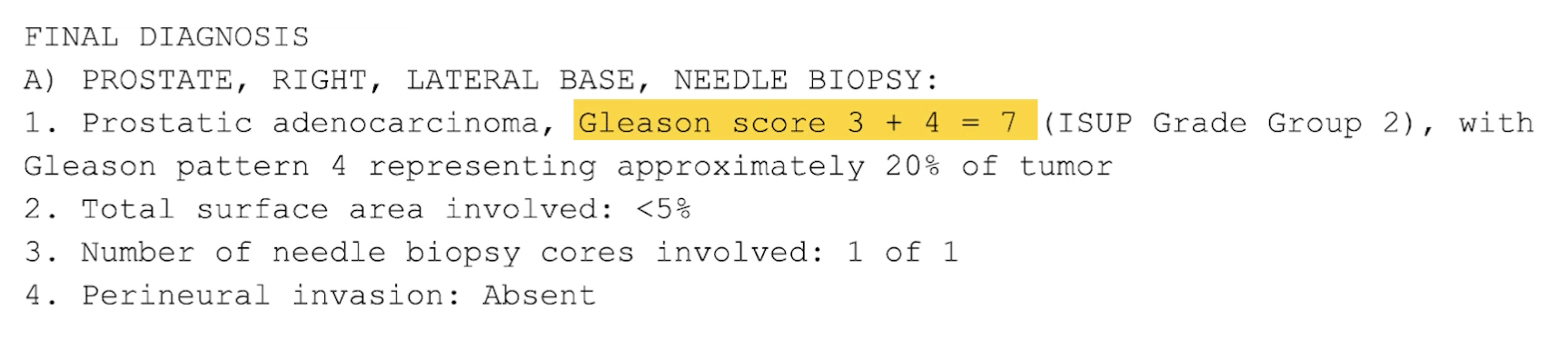
The Gleason Score is given as an equation. The first number what most of the cancer looks like. If the second number is different than the first number, that means there was a subpopulation of cells that was different from the rest of the cells.
- Eg: 3+4 (most of the cancer is a level 3)
- Eg: 4+3 (most of the cancer is a level 4)
The higher the number, the more aggressive the cancer is. The lowest grade you can have on a Gleason Scale is a 3+3 = 6. The highest you could have is a 5+5=10.
ISUP Grade Group
The Gleason Score has had to be modified for what we know about prostate cancer. Back in 2016, The international society of urologyic pathology (ISUP) can up with a new grading system. That’s the single number in the parenthesis next to the Gleason score.
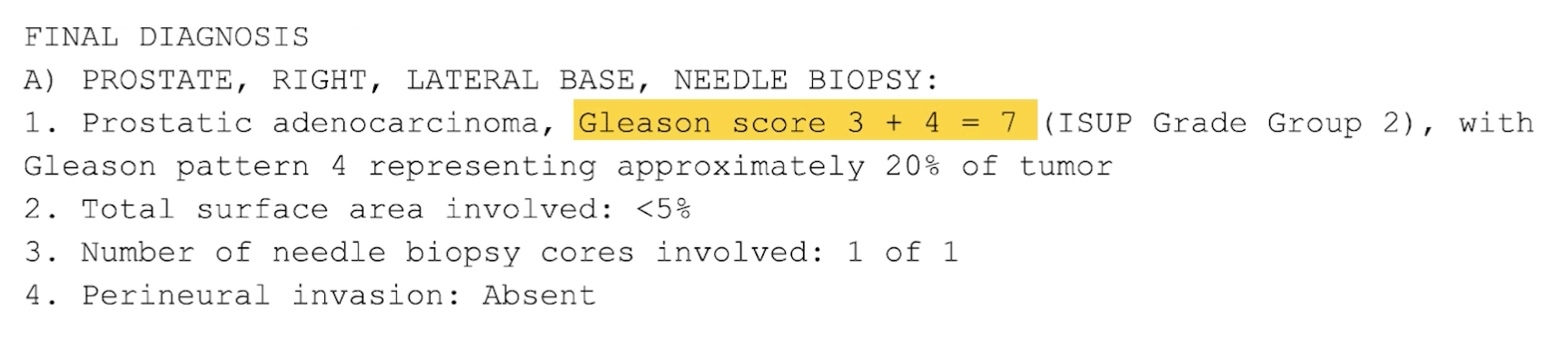
ISUP Grade Group
1 = Least aggressive
5 = Most aggressive
If your Gleason score is 3+3=6, your ISUP Grade Group would be a 1 (least aggressive). If it’s a Gleason score 5+4=9, your ISUP Grade Group would be a 5 (very aggressive).
Different Grades and Scores
You may notice you have multiple cores of your prostate that have cancer in them and they are different. We always use the highest score in determining how your cancer will behave and what treatment we will employ.
What Happens After Diagnosis?
Some people will need to have additional imaging done like a PSMA PET scan. This may be needed if:
- We are worried if the prostate cancer has spread to other parts of your body
- If your Gleason Score is 4+3=7 or Grade Group 3 or higher
- You have an extremely high PSA that is above 15 or 20.

Protect Healthy Prostate Tissue During Radiation Therapy
SpaceOAR™ Hydrogel is an advanced protective solution used during prostate cancer radiation therapy. It creates a temporary space between the prostate and the rectum—helping reduce radiation exposure to healthy tissue.
About SpaceOAR™ HydrogelRequest a Urology Appointment
Call 218-545-1024 or complete the form below. A member of our team will contact you to schedule your visit.