
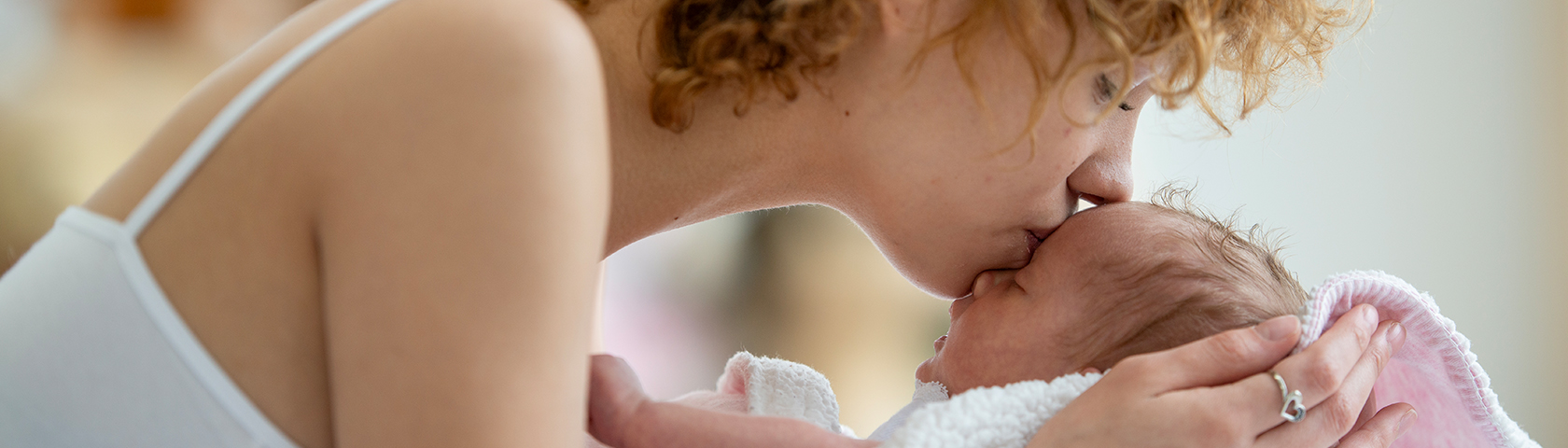
A New Way to Welcome Baby: CRMC Offers Maternal-Assisted C-Sections
Every Birth Story Is Unique
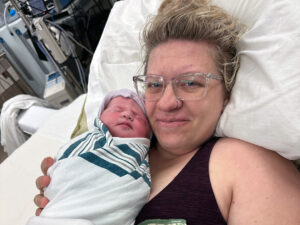
For CRMC patient Taylor Serocki, giving birth to her daughter Georgia meant finding a more active role in the delivery—even if it required a c-section.
“With my son, Walker, I labored for a day and a half on Pitocin but never dilated or had contractions. He was born via c-section, and I felt like I missed out on the experience of giving birth,” Serocki shared. “For my daughter, I wanted to be more involved. I’d seen videos of maternal-assisted c-sections and brought the idea to Dr. Tessmer-Tuck.”
Dr. Jennifer Tessmer-Tuck had never performed a maternal-assisted c-section before, but she was open to the idea. “I did some research and brought it to our surgical team,” she said. “What I love about Cuyuna Regional Medical Center is how quickly everyone jumped in to figure out how to make it happen, knowing it was important to the patient and her husband. We were all pleasantly surprised by how simple it was—it didn’t add time to the surgery or interfere with what we needed to do.”
After attempting a vaginal delivery for several days without progress, Serocki became CRMC’s first maternal-assisted c-section patient.
What Is a Maternal-Assisted C-Section?
A maternal-assisted c-section is similar to a traditional c-section, with one key difference: the mother helps deliver her own baby.
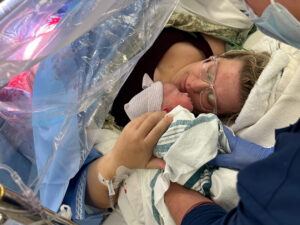
Just like in a standard c-section, the mother receives anesthesia and the surgical area is prepared. Then, sterile sleeves and gloves are placed over her arms, which rest on her chest above the surgical drape. When it’s time, the OB/GYN delivers the baby’s head and shoulders and helps the mother reach down, lift the baby under the arms, and guide them out of the belly.
The clear surgical drape allows the mom and her support person to see everything. Once the baby is delivered, the mother can hold the baby on her chest while the cord is cut. Afterward, the sterile gloves are removed, and she can continue holding her baby while the surgical team completes the procedure.
“It was liberating,” said Serocki. “I never felt defeated that I didn’t have a vaginal delivery. This gave me back some control. I got to be involved in bringing Georgia into the world.”
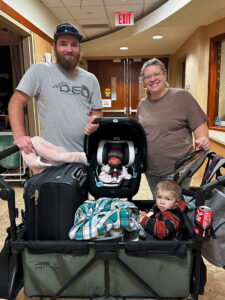
Her husband, Derek, was also able to cut the umbilical cord.
“With c-sections, some moms feel like they miss out on those first moments of contact,” said Dr. Tessmer-Tuck. “This approach helps restore that experience—mom is the first to touch and hold her baby.”
The response to the procedure was so positive that CRMC now offers maternal-assisted c-sections to other patients who are interested. Call 218-545-1049 to tour the birthing center and learn more about delivering your new bundle of joy.