

Heart Month: Know the Risks, Protect Your Heart, Save Lives
February is American Heart Month, a time to focus on cardiovascular health and raise awareness about heart disease—the leading cause of death in the United States. This observance is especially important for women, who may experience different symptoms and are encouraged to take proactive steps to protect their heart health.
Heart Disease: Key Facts You Should Know
- A leading cause of death
Heart disease accounts for 1 in every 5 deaths in the U.S., affecting men, women, and most racial and ethnic groups. - High blood pressure is common
Nearly half of U.S. adults have high blood pressure, a major risk factor for heart disease and stroke. Only 1 in 4 has it under control. - Significant economic impact
Heart disease-related healthcare costs, medications, and lost productivity totaled $252.2 billion between 2019 and 2020.
How to Protect Your Heart
Many cases of heart disease are preventable. Small, consistent lifestyle changes can make a big difference:
- Eat well: Choose a variety of nutrient-rich foods, including fruits, vegetables, whole grains, and lean proteins.
- Maintain a healthy weight: Aim for a weight that supports your overall health.
- Avoid tobacco: Don’t smoke—and if you do, seek support to quit.
- Stay active: Get at least 150 minutes of moderate-intensity physical activity each week.
- Schedule regular checkups: Monitor your blood pressure, blood sugar, and cholesterol levels.
Cardiac Arrest vs. Heart Attack: Know the Difference
Although often confused, cardiac arrest and heart attack are different medical emergencies with distinct causes and treatments.
What is Cardiac Arrest?
Cardiac arrest happens when the heart suddenly stops beating due to an electrical malfunction (arrhythmia), preventing blood from reaching the brain and other vital organs.
What Happens
- Sudden collapse
- Unresponsiveness
- No normal breathing or gasping
What to Do
- Call 911 immediately
- Start CPR right away
- Use an AED if available
- If others are present, have one person call for help and retrieve an AED while another performs CPR
What is a Heart Attack?
A heart attack occurs when blood flow to the heart is blocked, usually by a blocked artery, damaging the heart muscle.
Common Symptoms
- Chest discomfort or pressure
- Shortness of breath
- Cold sweats, nausea, or vomiting
- Women may experience atypical symptoms, such as back, neck, or jaw pain
What to Do
-
-
Call 911 right away—even if symptoms are unclear
-
Use emergency medical services instead of driving; EMS can begin treatment immediately
-
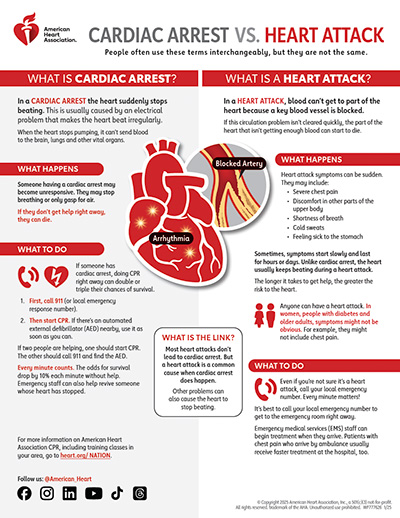
Download the Cardiac Arrest vs. Heart Attack infographic from the American Heart Association.
Take Action This February
Make heart health a priority this American Heart Month. Learn the warning signs, adopt heart-healthy habits, and share this information with others. Awareness and action can save lives—and help build a healthier future for everyone.
Source: American Heart Association

Expert Heart Care
Our cardiology team partners with you to assess your heart health and develop a personalized treatment plan. From prevention and diagnosis to advanced treatments, we’re here to help you maintain a strong, healthy heart.
Cardiology